Compare Instagram Followers: How to Compare Two Accounts Side by Side (2026 Guide)
If you want to compare Instagram followers of two accounts side by side, you are asking one of the most useful questions in social media growth. Whether you are sizing up a competitor, choosing between two influencers for a collaboration, or simply curious how your own account stacks up, a proper follower comparison tells you far more than a quick glance at two numbers on a profile page.
In 2026, a follower count alone does not tell the whole story. Fake followers, engagement rates, audience overlap, and growth trends all shape what that number really means. This guide shows you how to compare Instagram followers the right way: manually, with live follower counters, with audience overlap checks, and with Instagram’s own Competitive Insights — plus a ready-made snapshot table you can reuse for every comparison you run.
By the end of this guide, you will know exactly which metrics to record, which numbers actually matter, and which mistakes to avoid. To compare Instagram followers in real time as you read, keep a follower tracking app open in another tab and follow along with each method below.
Why Compare Instagram Followers of Two Accounts?
People compare Instagram followers for very different reasons, and the reason shapes the method. A brand choosing between two micro-influencers cares about engagement quality and audience overlap. A creator benchmarking their own growth cares about velocity — who is growing faster and why. A curious user just wants to know who is ahead. All three are valid, but they need different data.
The most common use cases are competitor research and influencer vetting. If you run a business account, comparing your follower base against a direct competitor shows you where you stand and where the gaps are. If you are hiring an influencer, comparing their followers against another candidate can reveal inflated numbers, bought audiences, or a far more engaged community hiding behind a smaller total.
Creators also compare Instagram followers to set realistic goals. Seeing that an account in your niche gained 5,000 followers in a month while you gained 800 is not a reason to feel bad — it is a reason to study what they did differently. Maybe they post daily Reels, maybe they collaborate, or maybe their audience is simply in a faster-growing niche. A structured comparison turns envy into a plan.
- Competitor benchmarking: track how rival accounts grow and what content drives their growth.
- Influencer vetting: spot fake followers and low engagement before you spend money on a partnership.
- Personal growth tracking: measure your own progress against accounts you admire.
- Niche research: find which content styles win followers fastest in your topic area.
- Collaboration planning: check audience overlap before a shoutout or joint giveaway.
How to Compare Two Instagram Accounts Side by Side (The Manual Method)
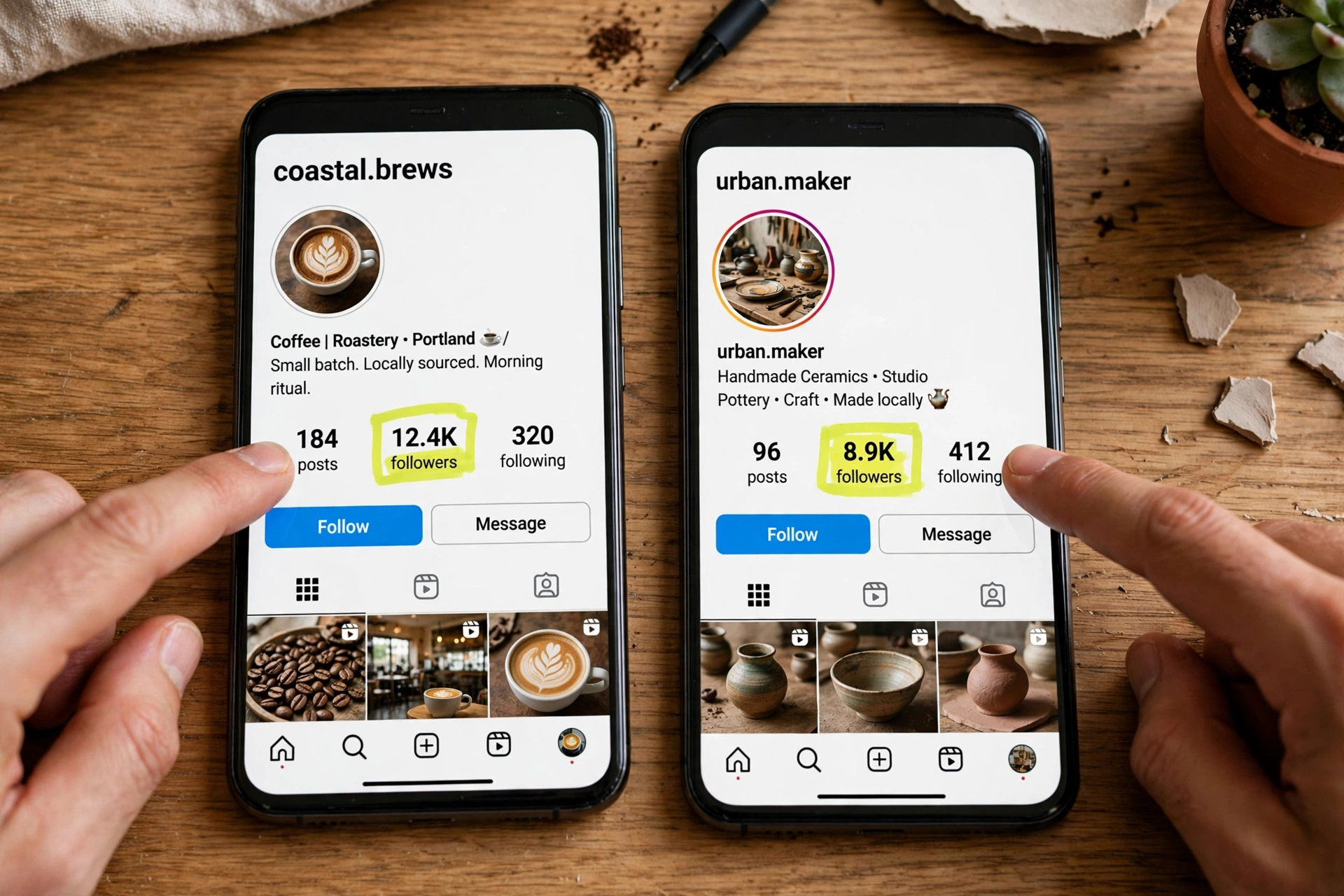
The simplest way to compare Instagram followers is the manual method: open both profiles and record the numbers yourself. It takes five minutes, needs no tools, and works for any public account. Open each profile in a separate browser tab or on two phones so you can look at them truly side by side.
- Step 1 — Record the headline stats. For each account, write down followers, following, and total posts. Note the exact numbers, not rounded versions.
- Step 2 — Check the last 12 posts. Add up the likes and comments on each account’s most recent 12 posts and divide by 12. This gives you the average engagement per post.
- Step 3 — Calculate the engagement rate. Divide average engagement (likes + comments) by the follower count and multiply by 100. An account with 10,000 followers and 500 average interactions has a 5% engagement rate.
- Step 4 — Compare content and bios. Note posting frequency, content mix (Reels vs photos vs carousels), bio clarity, and whether there is a link or call to action.
- Step 5 — Screenshot both profiles. Follower counts change constantly, so capture the moment with screenshots dated the same day.
- Step 6 — Repeat weekly. One snapshot tells you who is ahead; four weekly snapshots tell you who is actually growing.
If you prefer not to leave a trace while researching competitors, you can compare Instagram followers of public accounts without logging in or appearing in story views — just open the profiles in a private browser window and record the public stats.
Use a Live Follower Counter to Compare Instagram Followers
When two accounts are close — or when you want to watch a milestone race in real time — a live follower counter is the best tool for the job. These dashboards refresh every few seconds and display two accounts next to each other, so you can literally watch the gap widen or close. They are perfect for tracking unfollow waves, viral spikes, or the final hours of a follower milestone race.
Live counters pull from public profile data, so they work for any public account without login. The numbers may lag Instagram’s own display by a few seconds, but for comparison purposes that does not matter — both accounts are measured the same way at the same moment. Some dashboards also show daily gains, which is the single most useful number when you compare Instagram followers over time rather than at one instant.
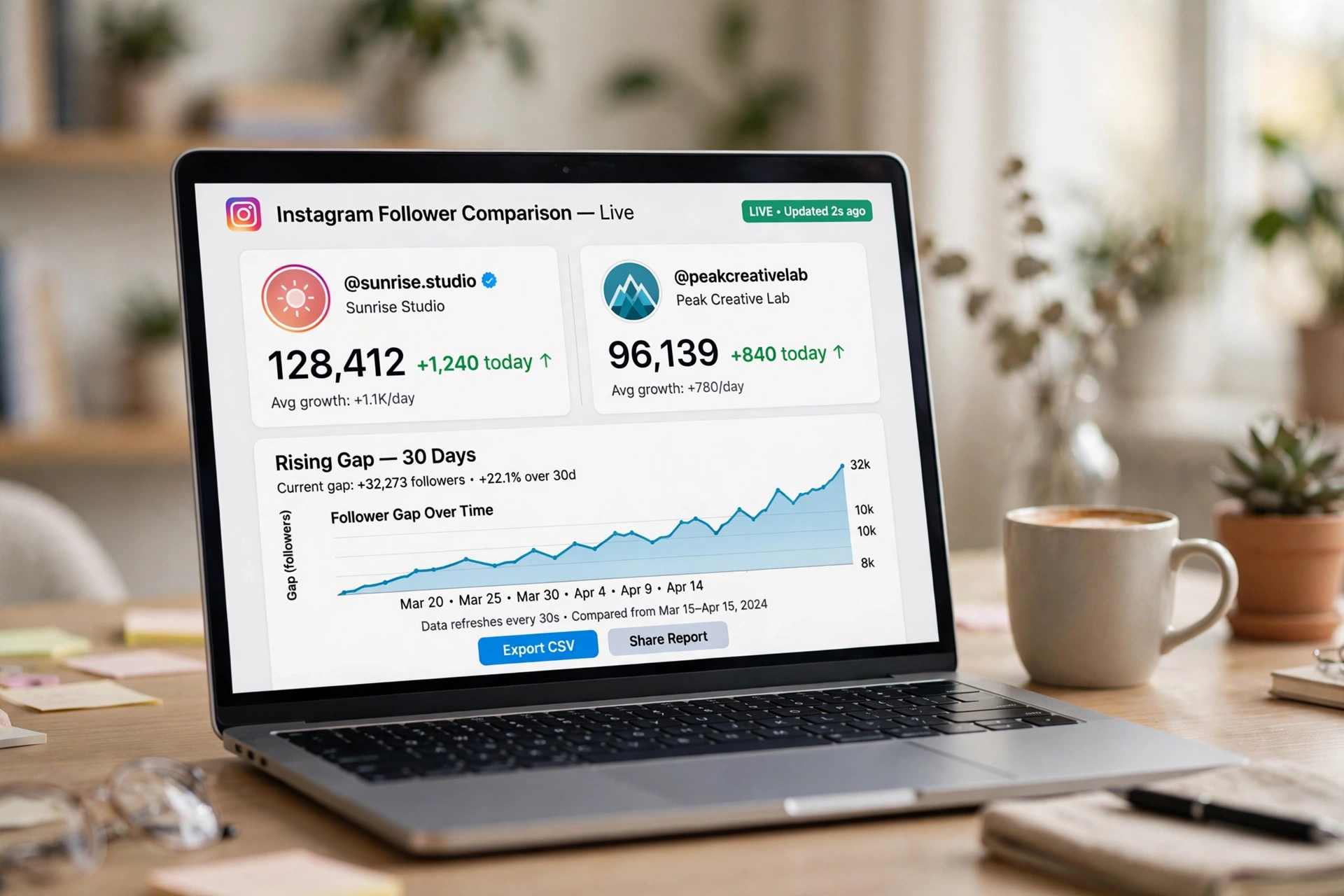
Use a live counter when the exact timing matters: during a product launch, after a viral Reel, or when you are deciding which of two influencers to partner with this week. And if you compare Instagram followers and notice your own count dropping while a competitor climbs, it may be time to audit your following list and clean up inactive or irrelevant accounts.
Check Audience Overlap, Not Just Totals
Two accounts can both have 50,000 followers and share almost none of the same people — or share half their audience. That difference changes everything. High audience overlap means the accounts compete for the same attention, which matters for advertisers and collaborators. Low overlap means they reach different corners of a niche, which matters for growth strategy.
Instagram itself gives you a small window into overlap: when you visit someone’s profile, you may see “Followed by” names — mutual followers you share. For a deeper check, open the followers list of each account and search for the same usernames. It is slow, but for small accounts it works. Business and creator accounts get a better option: Instagram’s Professional Dashboard includes audience insights such as top locations, age ranges, and active times, which you can compare across your own accounts.
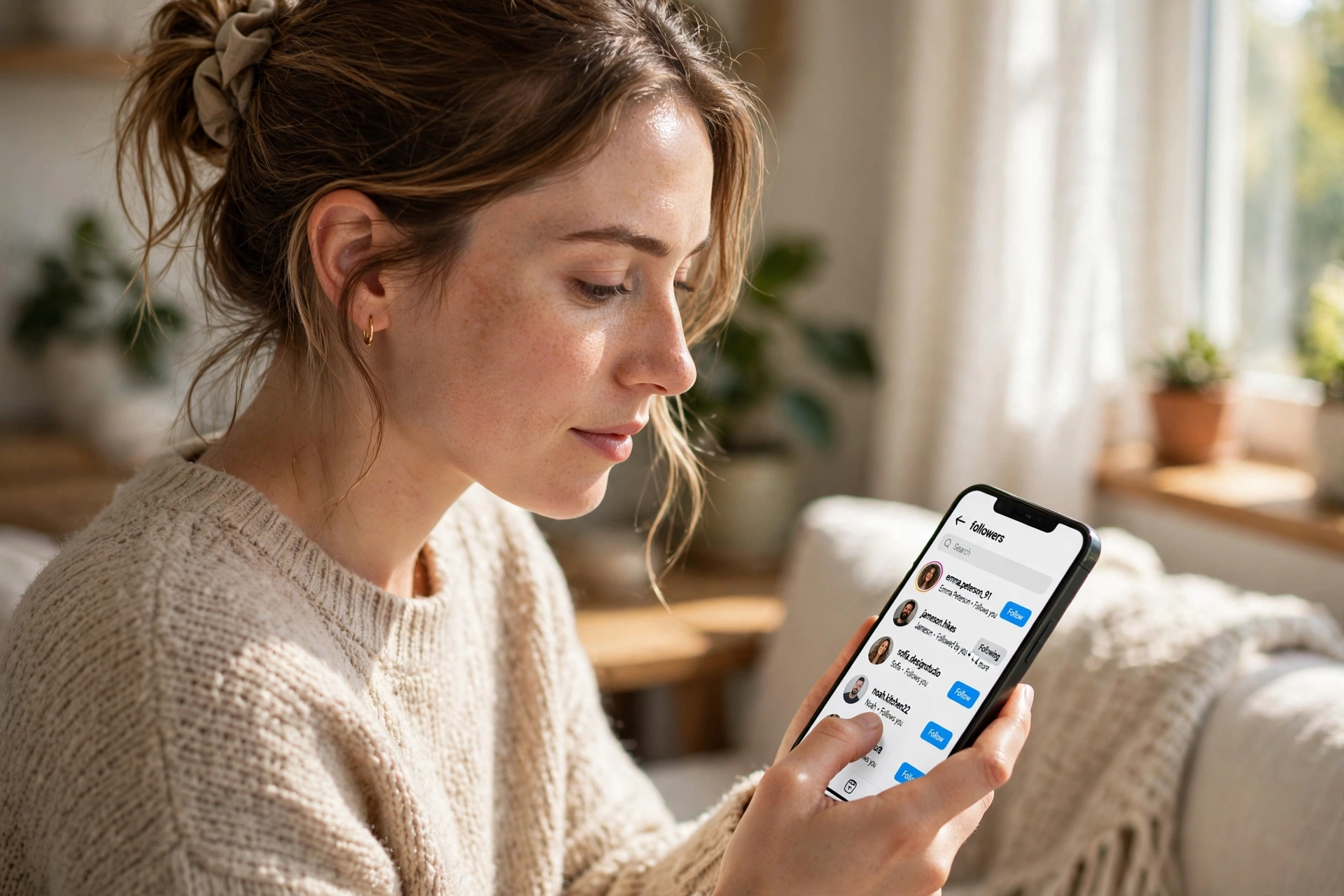
Third-party tools also claim to measure mutual followers, but treat their exact numbers with caution — Instagram limits what outside apps can see, so overlap figures are estimates. Use them for direction, not precision. And once you compare Instagram followers and spot the gap between you and a rival, a proven growth playbook is the fastest way to start closing it.
Build a Side-by-Side Snapshot Table
A comparison is only as good as your notes. Copy this table into a spreadsheet or a notes app and fill it in for both accounts on the same day. Revisit it weekly and you will build a growth history that no single screenshot can give you. Replace the example numbers below with the real ones you record.
| Metric | Account A | Account B |
|---|---|---|
| Followers | 48,200 | 51,700 |
| Following | 312 | 1,240 |
| Total posts | 486 | 392 |
| Followers gained (last 30 days) | +1,840 | +960 |
| Avg. likes (last 12 posts) | 2,150 | 1,420 |
| Avg. comments (last 12 posts) | 96 | 58 |
| Engagement rate | 4.7% | 2.9% |
| Posting frequency | Daily Reels | 3x per week |
| Bio link / CTA | Yes — shop link | No link |
| Estimated audience overlap | Check mutual followers manually | |
Notice how the table already tells a story: Account B has more followers, but Account A grows faster, engages better, and posts more consistently. That is the whole point of a structured comparison — the headline number is just the beginning.
What the Numbers Actually Mean
Raw follower counts are the least informative number on a profile. What matters is the quality and behavior behind them. Engagement rate is the great equalizer: divide average likes plus comments by followers and multiply by 100. In 2026, a healthy rate is roughly 1–3% for large accounts and 3–6% for smaller ones. An account with fewer followers but double the engagement rate is usually the stronger account.
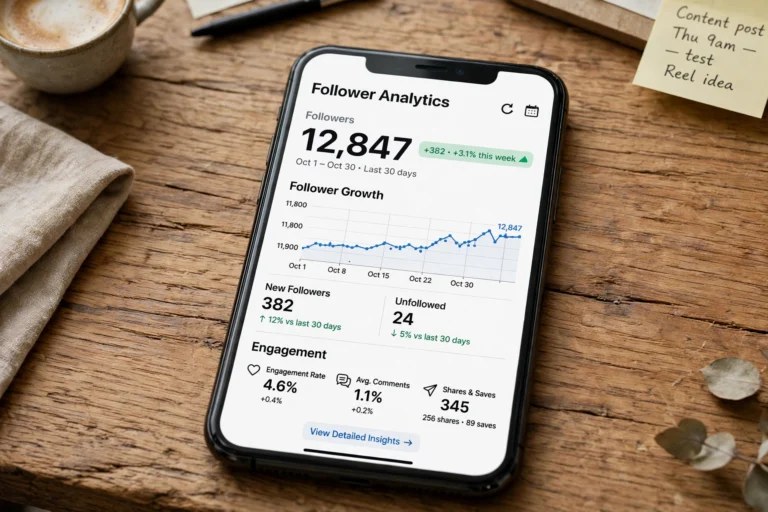
Growth velocity matters more than totals. An account gaining 2,000 followers a month will overtake a stagnant larger account within a year. Track the 30-day gain column in your snapshot table — it is the best predictor of where each account is heading. Sudden spikes deserve a closer look: check whether a viral post, a shoutout, or a giveaway caused them, because giveaway followers often unfollow within weeks.
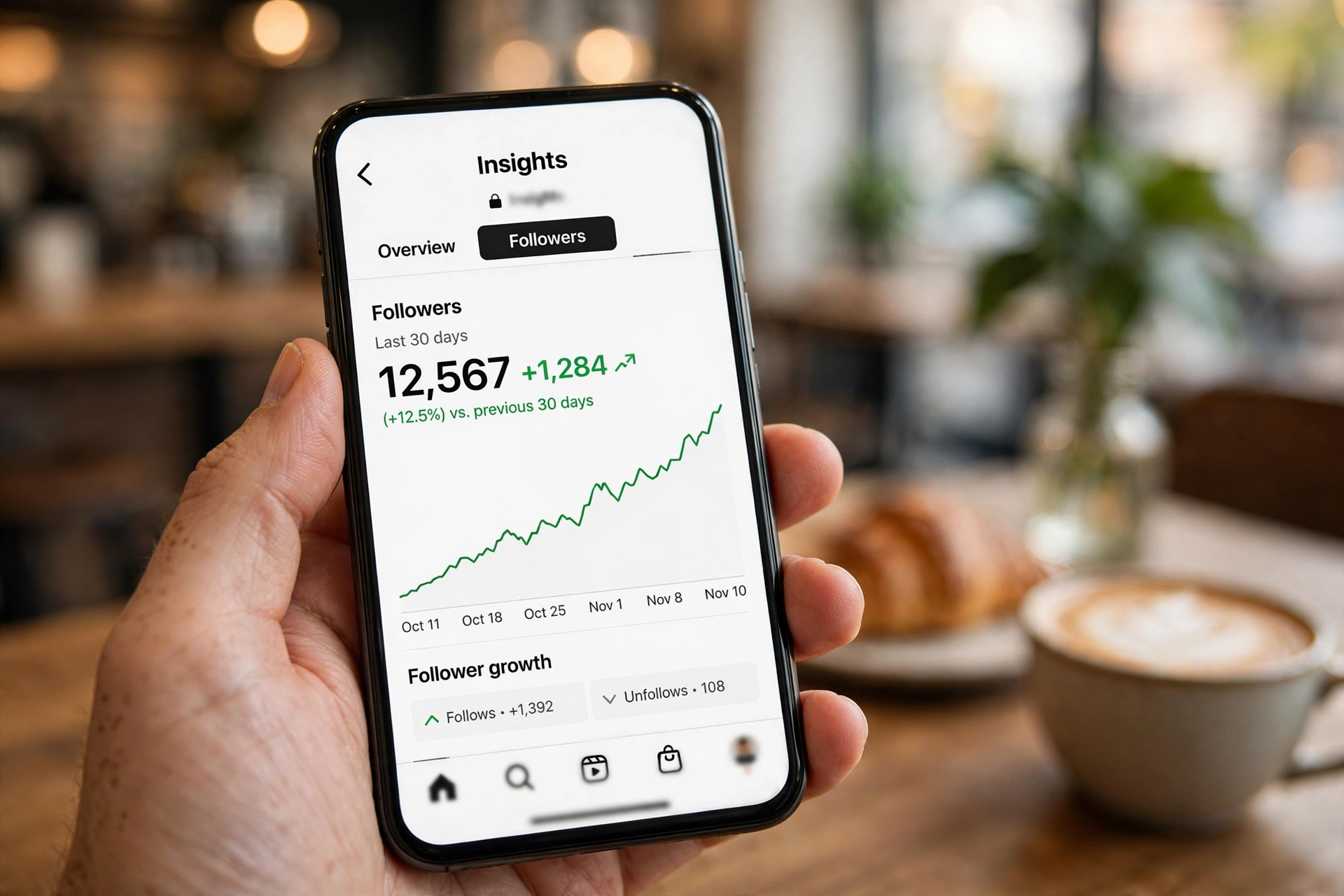
Watch for fake follower signals too: a huge follower count with tiny engagement, thousands of followers with no profile photos, or a following list full of unrelated spam accounts. When you compare Instagram followers between two candidates for a sponsorship, the account with slightly fewer but clearly real followers almost always delivers better results.
Finally, keep niche context in mind. A local bakery with 8,000 highly engaged local followers can outperform a generic meme page with 200,000 passive ones. Compare accounts within the same niche and audience type, or the numbers will mislead you.
7 Mistakes to Avoid When You Compare Instagram Followers
- Comparing only the headline number. Followers without engagement, growth, and quality context are just vanity metrics.
- Ignoring fake followers. Bought or bot followers inflate totals and crush engagement rates. Always sanity-check quality.
- Comparing different niches. A fitness coach and a travel page play different games; their numbers are not directly comparable.
- Using a single snapshot. One day’s numbers can be skewed by a viral post or a purge. Track at least four weeks.
- Forgetting engagement rate. It is the single best predictor of real influence — never skip the calculation.
- Trusting third-party overlap numbers blindly. Outside tools estimate mutual followers; treat exact figures as approximations.
- Comparing private vs. public accounts. Private accounts hide posts and lists, so you cannot verify engagement — compare public to public.
Remember that content quality is often the hidden variable: when you compare Instagram followers across creators, the accounts with sharper hooks and stronger captions usually win the engagement game, even with smaller audiences.
Frequently Asked Questions
Can you compare Instagram followers of two private accounts?
Only partially. You can see the follower counts on private profiles, but you cannot view their posts, followers lists, or engagement without being accepted as a follower. For a meaningful comparison, both accounts should be public.
How accurate are live follower counters?
They are accurate enough for comparisons. Counters read public profile data and may lag Instagram’s own display by a few seconds, but since both accounts are measured the same way at the same moment, the gap between them is reliable.
Does Instagram show which followers two accounts share?
Instagram shows a few mutual followers under “Followed by” on a profile, but there is no built-in full mutual-followers list. For a complete overlap check you need to compare the followers lists manually or use a third-party tool’s estimate.
What is a good engagement rate when comparing accounts?
As a 2026 rule of thumb: 1–3% is solid for accounts over 100K followers, 3–6% is strong for accounts under 50K, and anything above 6% is excellent. Always compare rates within the same niche, since some topics naturally engage more.
How often should I compare Instagram followers?
Weekly is the sweet spot for active tracking — frequent enough to catch trends, spaced enough to smooth out daily noise. Monthly snapshots work fine for long-term benchmarking.
Can I compare Instagram followers without following the accounts?
Yes. Follower counts, bios, posts, and engagement on public accounts are all visible without following or even logging in. You never need to follow an account just to compare it.
Final Word
Learning to compare Instagram followers properly is a skill that pays off whether you are growing a brand, vetting influencers, or tracking your own progress. Start with the manual method, add a live counter when timing matters, check audience overlap before collaborations, and keep a snapshot table so every comparison builds on the last one.
The accounts that win in 2026 are not always the biggest — they are the ones with real, engaged audiences growing at a healthy pace. And if you use growth tools along the way, make sure the followers you gain are genuine: see how coin-based systems really work before you compare Instagram followers fairly against accounts that grew organically.
Bookmark this guide, run your first side-by-side comparison today, and repeat it monthly. The trends you spot will tell you exactly what to do next.